




What applies in Italy, in a nutshell.
Motorcycling in Tuscany: Rules, Dangers, and Tips
What's required, what can get expensive, and what to watch out for on the road.
Tuscany is a wonderful place to drive, as long as you know a few things to watch out for. Here are the traffic laws with all the relevant figures, the typical hazards on country roads, and what you need to know about your driver's license.
What Driver's License You Need
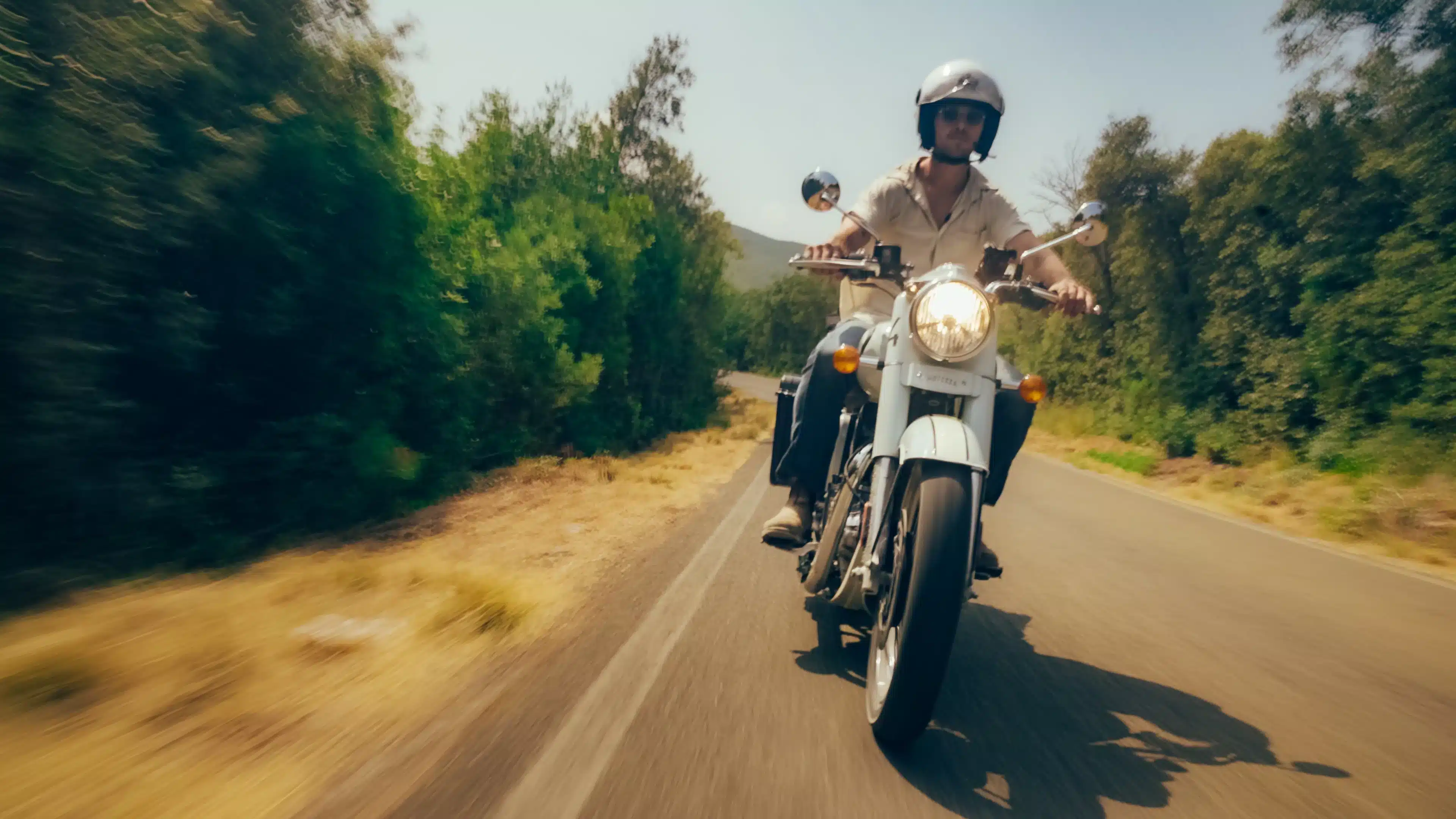
This applies to the Royal Enfield Classic 350 in Italy.
- Class A2 or A: A valid motorcycle license in any of these classes is sufficient for the Classic 350.
- EU and EFTA: If you're from the EU, Norway, Iceland, Liechtenstein, or Switzerland, your national driver's license is sufficient.
- From outside: You'll also need an International Driver's Permit (IDP). You can get one from your country's automobile club before you travel.
- Bring the following: Driver's license, an International Driver's Permit (IDP) if necessary, and a form of identification. These will be requested during traffic stops.
Traffic rules in Italy
The things that cause the most trouble on vacation.
- Speed limits: 50 km/h in built-up areas, 90 on country roads, 110 on expressways, 130 on highways. In rainy conditions, the limits are 90 and 110.
- Blood alcohol content: The limit is 0.5. Drivers who have had their license for less than three years must stay at 0.0.
- Light: The low beams are always on, even during the day.
- Helmet: Required for the rider and passenger; must be ECE-certified (22.05 or 22.06).
- Inspections: There are both fixed and mobile speed cameras, even on rural roads. The fines are high.
The roads of Tuscany
Curves, hills, and varying road surfaces. That's exactly what makes driving here so special, and that's exactly what you pay attention to.
- Curves and narrow roads: Many scenic routes are narrow and have limited visibility. Drive with foresight and stay in your lane.
- Changing Surfaces: Good asphalt alternates with patches and bumps. A steady pace gives you a margin of safety.
- Gravel, dust, leaves: In rural areas, debris is often found on the road at the edges and around curves.
- Wet conditions: After rain, road markings and old asphalt can be slippery. Apply the brakes and steer more gently.

Fueling Up
In rural areas, gas stations are fewer and farther between, and they often close for lunch. Make sure to fill up in time; some only accept cash at the self-service pumps.
Emergency
Europe-wide: 112.
Other people on the street
You're rarely alone on country roads.
- Road cyclists: Often in groups, on hills, and around curves—especially on weekends.
- Tractors and delivery trucks: Slowly, and sometimes in the middle of the street—especially during the grape harvest.
- Sporty Drivers: Drivers tend to take curves faster than expected. Be prepared for that.
- Wildlife and Pets: At the edges of fields, especially at dusk.
Any questions about the rules or routes?
Message me directly. I know the routes, the rules, and the little details that'll make your day easier. I usually reply the same day.
Want to book right away? Availability & Reservations